
Quick Facts
Efficacy: ★★★★☆
Safety: ★★★★★
Value for Money: ★★★★☆
Scientific Research: ★★★★☆
For Skin Type: All types, excellent for sensitive skin
Tipe Hydrogenated curcuminoid, natural derivative from turmeric
Primary function: Anti-tyrosinase, antioxidant, anti-inflammatory
Suitable for: All skin types, ideal for those intolerant to hydroquinone
What is tetrahydrocurcumin: definition and origin
The invisible turmeric: brightening without pigment
Tetrahydrocurcumin is a colorless natural derivative obtained from turmeric through hydrogenation of yellow curcuminoids. While traditional turmeric has a characteristic orange color that makes it unsuitable for brightening cosmetic formulations, tetrahydrocurcumin is completely colorless, while maintaining all the beneficial properties of the parent molecule.
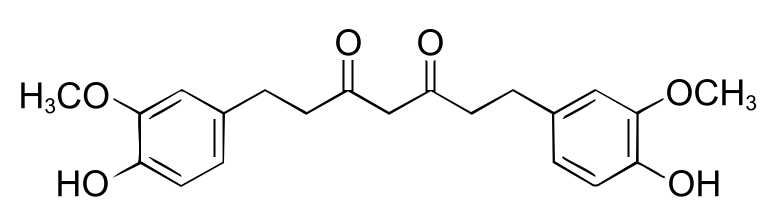
Molecular formula of tetrahydrocurcumin.
Natural biotransformation of turmeric
Tetrahydrocurcumin is the natural product of curcumin biotransformation in the human body. When you consume turmeric, the liver converts it into tetrahydrocurcumin, which is the biologically active form. Topical use of ultra-purified tetrahydrocurcumin provides this optimized form directly, bypassing the digestive process.
How tetrahydrocurcumin works on skin
Triple inhibition of melanogenesis
Tetrahydrocurcumin blocks melanin production through three complementary mechanisms: it directly inhibits the tyrosinase enzyme, blocks the activation of protein kinase C involved in melanocyte proliferation, and suppresses growth factors that stimulate melanogenesis. This multi-target approach is more effective than single inhibitors.
Dual antioxidant bioprotector
Ultra-purified tetrahydrocurcumin offers antioxidant protection through dual action: it prevents free radical formation and neutralizes those already formed. This dual capacity protects skin cells from UV damage and resulting inflammation, with beneficial effects beyond simple brightening. It is more effective than vitamin E in inhibiting lipid peroxidation.
Superiority over other natural brighteners
In vitro studies document that tetrahydrocurcumin inhibits tyrosinase more effectively than kojic acid, 40% glabridin from licorice, and vitamin C. This superiority translates into clinical results comparable to 4% hydroquinone but with an excellent safety profile.
What tetrahydrocurcumin is used for: skin problems solved
Clinical results: efficacy equal to hydroquinone without side effects
A randomized double-blind study on 50 subjects compared tetrahydrocurcumin vs 4% hydroquinone. After 4 weeks, both showed significant reduction in pigmentation with mexameter, without statistically relevant differences. The crucial difference: 0% adverse reactions with tetrahydrocurcumin vs 50% with hydroquinone.
Exceptional safety profile
The primary irritation test assigned a score of 0 to 0.25% tetrahydrocurcumin, classifying it as non-irritant according to NIOSH standards. No subject developed erythema, itching, dryness, burning or other adverse effects. Safe for intact skin and ideal for sensitive skin that does not tolerate hydroquinone.
Main indications: when to use it
Particularly effective for melasma, post-inflammatory hyperpigmentation, sun spots, and general tone evening. Being free from hydroquinone side effects (contact dermatitis, leukoderma, ochronosis), it can be used even in prolonged therapies without risks. Excellent for darker phototypes that are more susceptible to reactive hyperpigmentation.
Synergistic combination with other actives
La tetraidrocurcumina si abbina perfettamente con l'acido tranexamico che agisce a monte bloccando l'infiammazione, e con il cetyl tranexamate mesylate ad alta biodisponibilità. Questa combinazione tripla offre un'azione schiarente multi-meccanismo senza irritazione.
Tetrahydrocurcumin and other actives: what to combine
Synergy with tranexamic acids
The combination of tetrahydrocurcumin with cetyl tranexamate mesylate is particularly powerful: while tetrahydrocurcumin directly inhibits tyrosinase, tranexamic acid blocks the inflammatory signals that activate melanocytes. Complementary action at different levels of the melanogenic cascade.
Potentiating combinations
Funziona eccellentemente con la niacinamide che riduce il trasferimento dei melanosomi, con la vitamina C, che potenzia l'azione antiossidante, acido azelaico per un effetto schiarente addizionale. La natura delicata della tetraidrocurcumina permette combinazioni sicure anche per le pelli sensibili.
Compatible ingredients
Compatible with soothing plant extracts like licorice, tormentil, chamomile. Integrates well in formulations with new generation retinoids like adapalene. No known chemical incompatibilities, making formulation versatile.
Is it safe? Side effects and contraindications
Safety superior to all standard brighteners
The controlled clinical study documents 0% adverse reactions with tetrahydrocurcumin after 4 weeks of twice-daily application. In comparison, 4% hydroquinone caused reactions in 50% of subjects: 30% mild, 20% moderate. No sensitization, contact dermatitis, or photosensitization observed.
Dermatological safety testing
The 48-hour closed chamber patch test on 50 subjects showed a primary irritation index of 0, classifying tetrahydrocurcumin as completely non-irritant according to NIOSH standards. Safe for prolonged contact with intact skin, even on sensitive facial areas.
No known contraindications
Unlike hydroquinone which is contraindicated in pregnancy, breastfeeding, and presents risks of ochronosis with prolonged use, tetrahydrocurcumin has no documented contraindications. Derived from food source (turmeric) and natural metabolite of the human body, it presents a favorable toxicological profile.
Safe long-term use
No cumulative adverse effects have been observed with prolonged use. This is a crucial advantage over hydroquinone which can cause irreversible ochronosis after months/years of use. Tetrahydrocurcumin can be used in maintenance therapies without risks.
The best products with tetrahydrocurcumin from Melicor
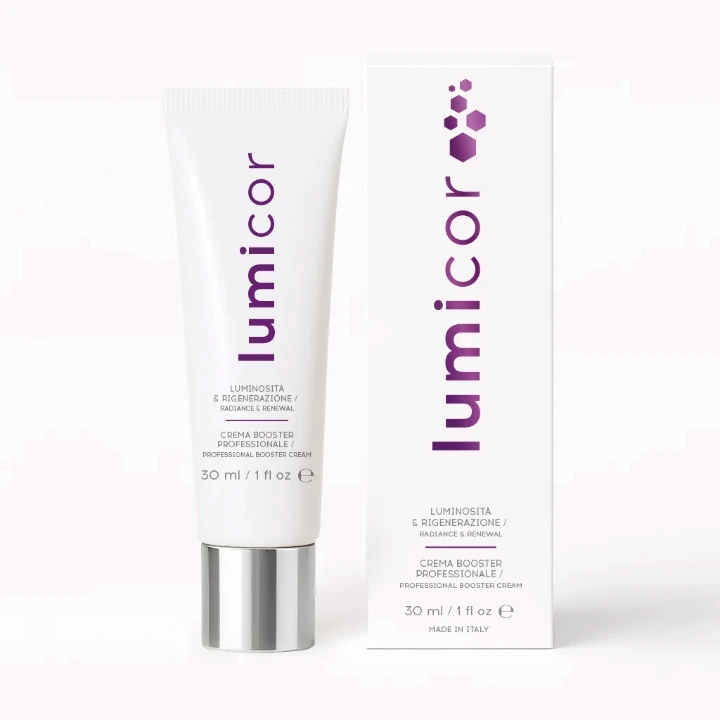
Lumicor anti-hyperpigmentation cream
Triple synergy
The Lumicor formulation combines tetrahydrocurcumin with high-bioavailability tranexamic acid and third-generation retinoid. This triple synergy acts on three levels: tyrosinase inhibition (tetrahydrocurcumin), blocking pro-melanogenic signals (tranexamic acid), and accelerating cell turnover (retinoid).
How to use Lumicor: optimal protocol
Apply twice daily to clean skin. Tetrahydrocurcumin is photostable so safe for morning use, but SPF 50 protection remains mandatory. Expected results: tone evening in 2-3 weeks, visible spot brightening in 4-6 weeks, maximum result in 8-12 weeks.
Frequently asked questions
Is tetrahydrocurcumin better than hydroquinone?
For safety yes, absolutely. Clinical studies show comparable efficacy (tetrahydrocurcumin = 4% hydroquinone) but with 0% side effects vs 50%. For those seeking results without risks of irritation, sensitization or ochronosis, tetrahydrocurcumin is superior.
How long does it take to see results?
Studies document significant reduction in pigmentation as early as week 1, with progressive improvement up to week 4. With Lumicor's concentration, results can be even faster: tone evening in 3 weeks.
Can I use it during pregnancy?
A differenza dell'idrochinone, controindicato in gravidanza, la tetraidrocurcumina è derivata da fonte alimentare (curcuma) e non ha controindicazioni documentate. Tuttavia, come per tutti i cosmetici in gravidanza, è consigliabile consultare il ginecologo.
Lumicor contains retinoids and, therefore, its use should be carefully evaluated and limited during pregnancy.
Does it work on dark skin?
Yes, excellently. The clinical study was conducted on Asian population with mexameter ≥200 units (darker skins). Tetrahydrocurcumin is particularly suitable for phototypes IV-VI who often develop reactive hyperpigmentation with aggressive brighteners.
Can regular turmeric replace it?
No. Food-grade turmeric contains yellow curcumin that stains the skin. Tetrahydrocurcumin is obtained through controlled hydrogenation that removes color while maintaining brightening properties. Ultra-purified tetrahydrocurcumin is also highly pure and standardized for cosmetic use.
Scientific studies: what research says
Study 1: efficacy vs hydroquinone in melasma
Studio randomizzato in doppio cieco su 50 soggetti filippini (21-45 anni, mexametro ≥200). Tetraidrocurcumina 0,25% applicata 2x/giorno per 4 settimane ha mostrato riduzione della pigmentazione statisticamente identica a quella dell'idrochinone al 4%, con lo 0% di reazioni avverse vs 50%.
Majeed et al., Household and Personal Care Today, 2010
Study 2: superior tyrosinase inhibition
Studi in vitro dimostrano che SabiWhite inibisce la tirosinasi più efficacemente dell'acido kojico, della glabridina 40% da liquirizia e della vitamina C. Conferma un meccanismo d'azione diretto sull'enzima chiave della melanogenesi.
Prakash & Majeed, Eurocosmetics, 2009
Study 3: dermatological safety patch test
48h closed chamber primary irritation test on 50 subjects. Primary irritation index = 0. NIOSH classification: completely non-irritant for intact human skin. No sensitization observed.
Research Institute for Tropical Medicine, Philippines, 2010
Study 4: bioprotective antioxidant action
Studi dimostrano che la tetraidrocurcumina è un antiossidante superiore alla vitamina E nell'inibire la perossidazione lipidica. Doppia azione: previene la formazione di radicali liberi e neutralizza quelli esistenti. Protezione cellulare dal danno UV.
Majeed et al., US Patent 5,861,415