:%20A%20Complete%20Guide%20%7C%20Effectiveness,%20Safety?unique=807fe2b)
Quick Facts
Efficacy: ★★★★☆
Safety: ★★★★★
Value for money: ★★★★☆
Ricerca Scientifica: ★★★★☆
Scientific research: All types, ideal for sensitive and oily
Type: Amide form of vitamin B3 (nicotinic acid)
Primary function: Multi-function (brightening, barrier, sebum regulation, anti-inflammatory)
Suitable for: Hyperpigmentation, acne, rosacea, sensitive skin, aging
What is niacinamide: definition and biochemistry
Vitamin B3: from diet to cosmetics
Niacinamide, also known as nicotinamide or vitamin PP (pellagra preventing), is the amide form of vitamin B3. While the body obtains it primarily from diet (meat, fish, legumes, whole grains) and uses it for over 400 enzymatic reactions, topical application provides superior local concentrations with specific dermatological effects not achievable orally.
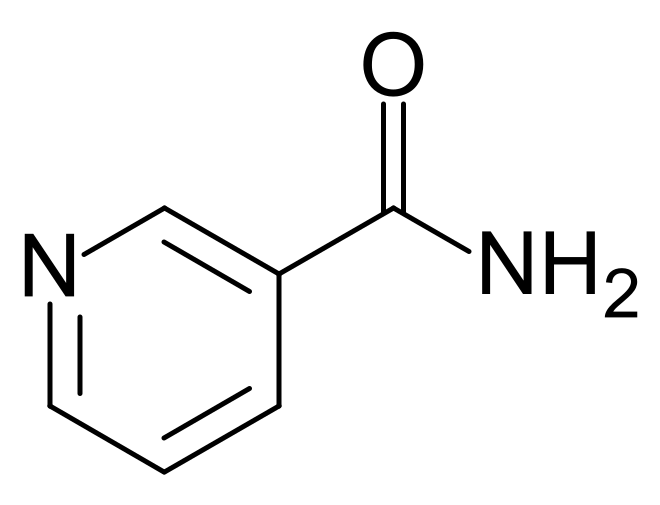
Niacinamide (Vitamin PP) chemical formula.
Difference between niacinamide and nicotinic acid
Crucial not to confuse niacinamide with nicotinic acid (niacin). The latter causes characteristic "flushing" with erythema, itching and sensation of heat due to vasodilation. Niacinamide, the amide form, does not cause flushing and is perfectly tolerated even by sensitive and reactive skin. This distinction is fundamental for cosmetic safety.
NAD+ and NADP+ coenzyme: cellular energy
Inside the cell, niacinamide is converted to nicotinamide adenine dinucleotide (NAD+) and its phosphate form (NADP+), essential coenzymes for cellular energy metabolism and redox reactions. Optimal NAD+ levels are crucial for DNA repair, barrier lipid synthesis and protection from oxidative stress.
How niacinamide works on skin
Melanosome transfer blocking: anti-spot mechanism
Niacinamide's primary brightening mechanism is unique: it doesn't inhibit tyrosinase like other agents, but blocks the transfer of melanosomes from melanocytes to surrounding keratinocytes. Studies demonstrate 35-68% reduction in melanosomal transfer in vitro. This explains efficacy on existing hyperpigmentation without interfering with protective basal melanogenesis.
Multi-level epidermal barrier strengthening
Niacinamide stimulates the synthesis of ceramides, free fatty acids and cholesterol, the three fundamental lipids of the stratum corneum. It also increases production of structural proteins (involucrin, filaggrin, keratin) and cohesion glycoproteins. Result: 24% reduction in transepidermal water loss (TEWL) and 67% increase in corneal lipid content in 4 weeks.
Pleiotropic anti-inflammatory action
Niacinamide suppresses production of pro-inflammatory cytokines (IL-1, IL-6, IL-8, TNF-α) and inhibits leukocyte migration to inflamed sites. This mechanism is particularly advantageous in inflammatory acne, rosacea, atopic dermatitis and prevention of post-inflammatory hyperpigmentation. Effect comparable to 1% topical clindamycin without risks of antibiotic resistance.
Sebaceous regulation: less oily skin
Through reduction of triglyceride and fatty acid synthesis in sebocytes, niacinamide normalizes sebum production. Studies document 36-57% reduction in sebaceous excretion after 8-12 weeks of 2% topical application. Useful mechanism for acne, enlarged pores, shiny appearance, without rebound effect of aggressive astringents.
Collagen synthesis and antioxidant protection
Niacinamide stimulates production of type I and III collagen, glycosaminoglycans and extracellular matrix proteins, improving elasticity and firmness. As an antioxidant, it increases levels of reduced glutathione and protects from photo-induced free radical damage. 37% reduction in fine lines in 12 weeks at 5%.
What niacinamide is used for: skin problems solved
Hyperpigmentation: solid clinical evidence
Randomized controlled studies document that 4-5% niacinamide significantly reduces hyperpigmentation after 4 weeks, with progressive improvement up to 8 weeks. Demonstrated efficacy on melasma, sun spots, post-inflammatory hyperpigmentation. 35-40% reduction in spot intensity measured with chromameter, comparable to 4% hydroquinone but without side effects.
Acne: safe alternative to antibiotics
Comparative studies show that 4% niacinamide gel applied 2x/day is equipotent to 1% clindamycin in reducing papules and pustules after 8 weeks (82% vs 68% reduction), with superiority on comedogenesis. Combination of anti-inflammatory action and sebum regulation explains efficacy. Zero risks of antibiotic resistance, superior safety profile.
Rosacea and sensitive reactive skin
Exceptional tolerability and anti-inflammatory action make niacinamide ideal for rosacea. Studies document significant reduction of erythema, papules, telangiectasia. Barrier strengthening reduces skin reactivity to environmental triggers. Particularly useful combined with potentially irritating treatments like retinoids to mitigate side effects.
Skin aging: demonstrated anti-aging effect
12-week clinical trials with 5% niacinamide show statistically significant improvement in fine lines (-37%), elasticity (+25%), texture, tone. Action is multifactorial: collagen stimulation, antioxidant protection, reduction of senile hyperpigmentation. Visible effect as early as 4 weeks, maximum at 12 weeks.
Potentiating synergy with other actives
Niacinamide is the perfect "team player": it enhances retinoid efficacy while reducing irritation, pairs with tranexamic acid for double anti-spot action, works synergistically with tetrahydrocurcumin for multi-mechanism brightening. Compatible with AHA, BHA, vitamin C, peptides.
Niacinamide and other actives: what to combine
Winning combination with retinoids
The niacinamide + retinoid synergy is scientifically documented: niacinamide reduces erythema, dryness and desquamation induced by retinol or tretinoin by 40-50%, allowing better tolerance and treatment adherence. Mechanism: barrier strengthening and anti-inflammatory action. Ideal combination in Lumicor with oleyl adapalenate.
Triple anti-hyperpigmentation synergy
Lumicor exploits the complementarity of three mechanisms: niacinamide (melanosome transfer blocking) + (pro-melanogenic signal inhibition) + (tyrosinase inhibit](/blog/ingredients/tetrahydrocurcumin) ion). This triad acts on different levels of the melanogenic cascade, tripling brightening efficacy.
Safe and effective combinations
Niacinamide is compatible with: vitamin C (preferably stable forms SAP or MAP), hyaluronic acid, peptides, ceramides, alpha-arbutin, azelaic acid, AHA/BHA (attention to pH), antioxidants (resveratrol, vitamin E). Versatility is maximum, making niacinamide a base ingredient of almost every routine.
False myth: incompatibility with vitamin C
The myth that niacinamide and vitamin C cannot coexist derives from obsolete chemistry. Recent studies confirm that modern stabilized formulations allow safe and effective combination. Conversion of niacinamide to nicotinic acid (causes flushing) requires extreme pH and elevated temperatures not present in well-formulated cosmetics.
Optimal layering protocol
Morning: cleanser → serum with niacinamide → vitamin C (if used) → moisturizer → SPF 50. Evening: cleanser → serum with niacinamide → [retinoid or Lumicor](/shop/lumicor-crema-anti-iperpigmentazione-acido-tranexamico-26) → moisturizer if needed. Niacinamide can be applied both morning and evening without problems.
Is it safe? Side effects and contraindications
Exceptional safety profile: gold standard
Niacinamide is considered one of the safest cosmetic ingredients available. Thousands of clinical studies document superior tolerability across all populations, including children, the elderly, sensitive skin, and individuals with atopic dermatitis. It does not cause photosensitivity, is non‑comedogenic, and non‑sensitizing. It is recognized and authorized as a safe ingredient in the European Union under Regulation (EC) No. 1223/2009 on cosmetic products.
Rare and mild side effects
The incidence of adverse reactions is extremely low (<1%). Occasionally, in predisposed subjects, high concentrations (>5%) may cause mild transient redness or sensation of warmth, never comparable to nicotinic acid flushing. Very rare cases of allergic contact dermatitis documented in literature.
No absolute contraindications
Unlike hydroquinone (contraindicated pregnancy), retinoids (teratogenic), high-dose AHA (photosensitizing), niacinamide has no documented absolute contraindications. Safe in pregnancy and breastfeeding according to available data. Applicable on damaged skin (does not cause burning), suitable for all phototypes.
Compatibility with dermatological conditions
Utilizzabile in sicurezza in: dermatite atopica, eczema, psoriasi lieve, rosacea, acne, pelle sensibile reattiva. Anzi, spesso raccomandata proprio per queste condizioni grazie all'azione lenitiva e al rafforzamento della barriera. Nessuna interazione negativa con i farmaci topici comuni.
Safe long-term daily use
Safety studies extended up to 12 months of daily application show no cumulative adverse effects, toxicity, or reduced efficacy (no tachyphylaxis). Can be used indefinitely as part of maintenance routine, unlike some actives that require intermittent cycles.
The best products with niacinamide from Melicor
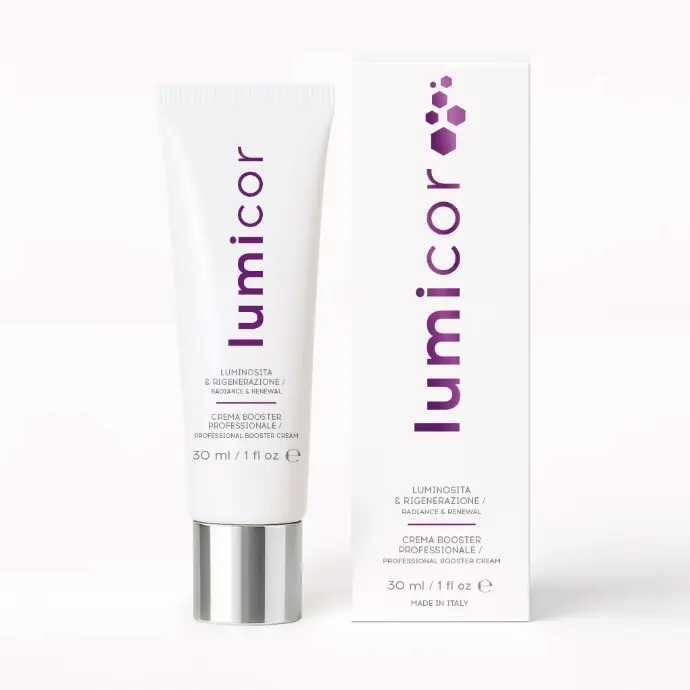
Lumicor: niacinamide in synergistic formula
In the Lumicor synergy, niacinamide is not the main brightening active ingredient but the "intelligent facilitator": it allows the skin to better tolerate oleyl adapalenate by increasing ceramides and barrier lipids, reduces inflammation that could worsen hyperpigmentation, and actively contributes to lightening by blocking the distribution of melanin to keratinocytes.
Strategic role in multi-active formula
In Lumicor synergy, niacinamide is not the primary brightening active but the "intelligent facilitator": it allows skin to better tolerate oleyl adapalenate by increasing ceramides and barrier lipids, reduces inflammation that could worsen hyperpigmentation, and actively contributes to brightening by blocking melanin distribution to keratinocytes.
Complementarity with other active ingredients
The Lumicor formula exploits complementary mechanisms: cetyl tranexamate mesylate blocks inflammatory signals that activate melanocytes, tetrahydrocurcumin directly inhibits tyrosinase, oleyl adapalenate accelerates turnover eliminating superficial melanin, 2% niacinamide prevents melanin redistribution and protects barrier.
Results timeline with niacinamide-enhanced formula
Weeks 1-2: barrier strengthening (niacinamide), retinoid adaptation.
Weeks 3-4: visible post-inflammatory erythema reduction, smoother texture.
Weeks 4-8: progressive spot brightening thanks to combined action of all actives.
Weeks 8-12: maximum result with 40-60% hyperpigmentation reduction and evened tone.
Frequently asked questions
Does niacinamide brighten skin like hydroquinone?
Niacinamide works with a different mechanism: it doesn't inhibit tyrosinase (melanin production) but blocks melanosome transfer from melanocytes to keratinocytes. Studies show efficacy comparable to 4% hydroquinone after 8 weeks, but with superior safety profile: zero risks of ochronosis, leukoderma, or irritation. Ideal for prolonged use.
How long does it take to see results?
Depends on the goal. For barrier strengthening: 2-4 weeks. For erythema/inflammation reduction: 3-4 weeks. For hyperpigmentation brightening: 4-8 weeks (progressive improvement up to 12 weeks). For sebum/pore reduction: 6-8 weeks. For anti-wrinkle effect: 8-12 weeks. Daily consistency is fundamental.
Can I use niacinamide with vitamin C?
Yes, absolutely. The incompatibility myth is obsolete. Modern formulations allow safe and effective combination. Optimal protocol: vitamin C in the morning (daytime antioxidant + supplementary UV protection) and niacinamide evening, or both together if products are well formulated. No conversion to nicotinic acid at normal cosmetic pH.
Is niacinamide safe during pregnancy?
Yes, it is considered safe. Unlike retinoids (teratogenic) and hydroquinone (contraindicated), niacinamide has no contraindications in pregnancy according to available data. It is a water-soluble essential vitamin obtained anyway through diet. However, as with all cosmetics in pregnancy, preventive medical consultation is always advisable.
Which concentration is better: 2% or 10%?
For barrier strengthening and anti-inflammatory action, 2% is sufficient. For hyperpigmentation and acne, 4-5% is optimal. Beyond 5%, incremental benefits are marginal and risk (minimal) of mild flushing increases slightly. The concentration in Lumicor is strategic: it supports retinoid tolerance and contributes to brightening without excessive overlap with other actives.
Studi scientifici: cosa dice la ricerca
Study 1: anti-hyperpigmentation mechanism via melanosomes
Studio in vitro dimostra che la niacinamide riduce del 35-68% il trasferimento dei melanosomi dai melanociti ai cheratinociti in co-coltura. Meccanismo: interferenza con le proteine di trasporto PAR-2. Questo spiega efficacia schiarente senza inibizione della tirosinasi. Conferma azione complementare rispetto ad altri schiarenti.
Hakozaki et al., British Journal of Dermatology, 2002
Study 2: clinical efficacy on melasma vs hydroquinone
8-week randomized trial on 27 Filipino patients with melasma. 4% niacinamide vs 4% hydroquinone, 2x/day application. Statistically similar hyperpigmentation reduction in both groups (mexameter), but hydroquinone caused irritation in 44% vs 0% with niacinamide. Clearly superior safety profile.
Navarrete-Solis et al., Dermatologic Surgery, 2011
Study 3: epidermal barrier strengthening and ceramides
12-week study demonstrates that 2% niacinamide increases stratum corneum ceramides, fatty acids and cholesterol content by 67%, reducing TEWL by 24%. Stimulated synthesis also of structural proteins (filaggrin, involucrin). Result: significantly strengthened barrier with improved hydration and resilience.
Tanno et al., Journal of Cosmetic Dermatology, 2000
Study 4: anti-acne efficacy vs topical clindamycin
8-week comparative study on 76 patients with moderate acne. 4% niacinamide gel 2x/day vs 1% clindamycin. Inflammatory lesion reduction 82% vs 68% respectively. Niacinamide also superior on comedones. Zero antibiotic resistance risk. Confirms role as safe alternative to topical antibiotics.
Shalita et al., International Journal of Dermatology, 1995
Study 5: wrinkle reduction and anti-aging improvement
12-week clinical trial with 5% niacinamide vs placebo on 50 women aged 40-60. Treated group shows statistically significant reduction of fine lines (-37%), hyperpigmentation (-29%), irregular texture (-31%), increased elasticity (+25%). Measured with profilometry, chromameter, cutometer. Mechanism: collagen stimulation and antioxidant protection.
Bissett et al., International Journal of Cosmetic Science, 2004
Conclusions: why niacinamide is essential
Niacinamide represents the quintessential multi-function ingredient in cosmetic dermatology. Very few actives simultaneously offer: documented brightening efficacy, epidermal barrier strengthening, anti-inflammatory action, sebaceous regulation, collagen stimulation, antioxidant protection. The exceptional safety profile and universal compatibility with other actives make it an indispensable component of any routine, from anti-acne to anti-aging to anti-hyperpigmentation.
In the context of professional formulations like Lumicor, 2% niacinamide plays a strategic role as "intelligent facilitator": it allows skin to better tolerate powerful actives like retinoids, reduces inflammation that would amplify hyperpigmentation, and actively contributes to brightening by blocking melanin distribution. A scientifically designed synergy for superior results with optimal tolerance.