
Quick Facts
Efficacy: ★★★★★
Safety: ★★★★★
Value for money: ★★★★☆
Scientific research: ★★★★★
For skin type: Tutti i tipi, eccellente per sensibile
Tipe: hird-generation synthetic retinoid, lipophilic ester of adapalene
Primary function: Selective RAR-γ receptor modulator, anti-inflammatory, keratolytic
Suitable for: Hyperpigmentation, acne, photoaging, sensitive skin
What is oleyl adapalenate: definition and chemistry
The retinoid revolution: third generation
Oleyl adapalenate is a third-generation synthetic retinoid derived from naphthoic acid. Unlike retinol (first generation) and tretinoin (second generation), third-generation retinoids were specifically designed to maximize efficacy while drastically reducing side effects. They represent the pinnacle of scientific evolution of vitamin A derivatives.
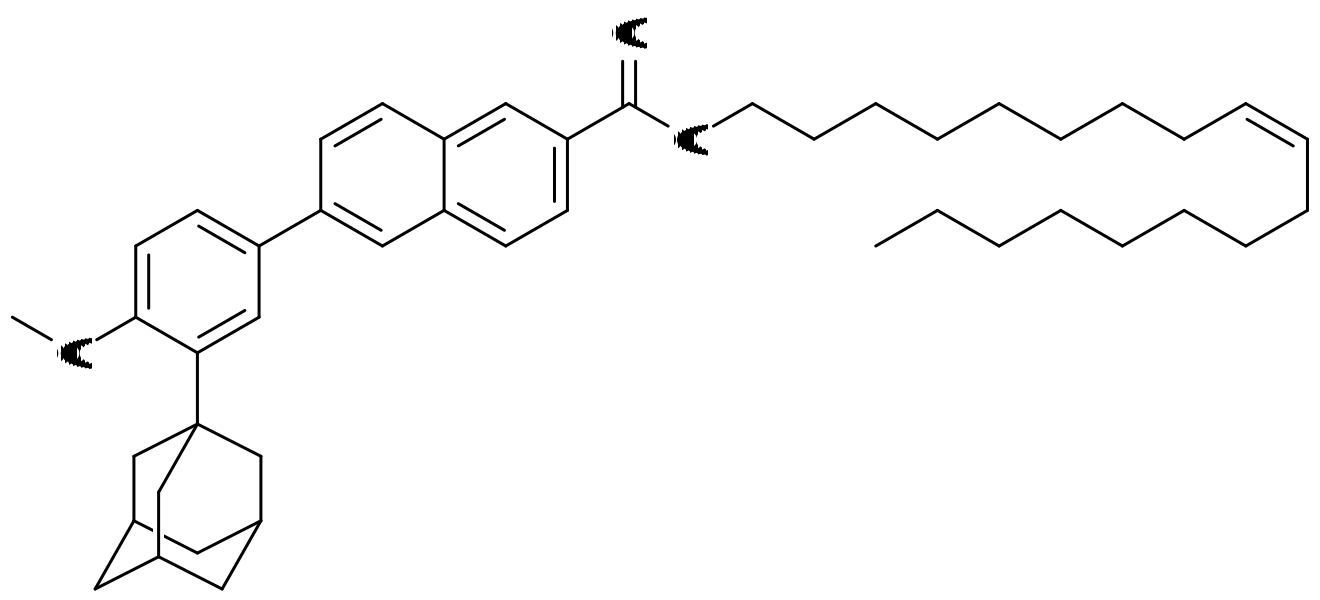
Chemical formula of oleyl adapalene.
Optimized lipophilic structure
The molecule consists of adapalene esterified with oleyl alcohol, creating a lipophilic form with high affinity for cell membranes. This chemical modification increases skin penetration and prolongs residence time in the epidermis, optimizing the efficacy/tolerability ratio. The gradual release of active adapalene minimizes concentration peaks that cause irritation.
Difference from classic retinoids
While retinol and tretinoin act on all retinoic receptors (RAR-α, β, γ), oleyl adapalenate binds selectively to RAR-γ receptors present in epidermal keratinocytes. This selectivity explains the superior anti-comedogenic efficacy and exceptional tolerability profile, with a 70% reduction in irritation compared to 0.5% retinol.
How oleyl adapalenate works on skin
Selective modulation of nuclear receptors
Oleyl adapalenate penetra nei cheratinociti e si lega selettivamente ai recettori RAR-γ nel nucleo cellulare. Questa attivazione modula l'espressione di oltre 500 geni coinvolti nella differenziazione cellulare, nella proliferazione, nell'apoptosi e nella risposta infiammatoria. Il risultato è la normalizzazione del turnover epidermico senza l'iperstimolazione che causa irritazione.
Direct anti-inflammatory action
Unlike retinol which often provokes reactive erythema, adapalene exerts potent anti-inflammatory action. It inhibits lipoxygenase and arachidonic acid, reducing the production of pro-inflammatory leukotrienes and prostaglandins. This mechanism is particularly advantageous in the treatment of post-inflammatory hyperpigmentation.
Acceleration of cell renewal
Il retinoide di terza generazione normalizza la differenziazione dei cheratinociti e accelera il turnover epidermico. Questo processo rimuove più rapidamente gli strati superficiali iperpigmentati, favorendo l'emergere di cellule nuove con una distribuzione melanica più uniforme. L'effetto esfoliante è controllato e progressivo, senza desquamazione visibile.
Prevention of follicular hyperkeratosis
Oleyl adapalenate prevents the abnormal adhesion of corneocytes that leads to comedone formation. This comedolytic action is superior to that of retinol thanks to RAR-γ selectivity. Result: visibly reduced pores, smoothed skin texture, lower risk of post-acne hyperpigmentation.
What oleyl adapalenate is used for: skin problems solved
Hyperpigmentation: accelerated brightening
In hyperpigmentation treatment, the third-generation retinoid accelerates the elimination of melanin deposited in superficial layers. Clinical studies document that adding adapalene to brightening regimens increases spot reduction speed by 30-40% compared to depigmenting agents alone. Particularly effective on resistant melasma.
Post-inflammatory hyperpigmentation
Direct anti-inflammatory action prevents amplification of the melanogenic response that follows skin trauma, acne, laser procedures. Applied preventively and during healing, it significantly reduces the risk of developing post-inflammatory hyperpigmentation, a common problem in darker phototypes.
Comedonal and inflammatory acne
RAR-γ selectivity makes oleyl adapalenate exceptionally effective against comedonal, papular and pustular acne. It normalizes follicular keratinization eliminating microcomedones that are precursors to lesions. Anti-inflammatory action reduces papules and pustules without antibiotics. Response rate: 85% after 12 weeks.
Photoaging and irregular texture
By stimulating type I and III collagen synthesis and inhibiting metalloproteinases that degrade the dermal matrix, the retinoid visibly improves superficial wrinkles, elasticity, firmness. Skin texture becomes smoother, pores are reduced, tone becomes more uniform. Visible results in 8-12 weeks.
Synergy with other brighteners
The combination of oleyl adapalenate with tetrahydrocurcumin and high-bioavailability tranexamic acid creates a multi-mechanism system: the retinoid accelerates exfoliation of superficial melanin, while other actives block new production. This synergy triples brightening efficacy.
Oleyl adapalenate and other actives: what to combine
Triple anti-hyperpigmentation synergy
The winning combination for resistant melasma unites oleyl adapalenate (superficial melanin exfoliation) + high-bioavailability cetyl tranexamate mesylate (blocking pro-melanogenic signals) + tetrahydrocurcumin (tyrosinase inhibition). Complementary action on three levels of the pigmentary cascade.
Safe potentiating combinations
Compatibile con la niacinamide che riduce l'irritazione da retinoide e potenzia la barriera cutanea. Funziona bene con l'acido azelaico per doppia azione anti-comedogenica. Vitamina C al mattino (retinoide serale) per una protezione antiossidante complementare. Ceramidi e acido ialuronico per contrastare l'eventuale secchezza iniziale.
What to avoid in combination
Do not combine with alpha-hydroxy acids (AHA) or beta-hydroxy acids (BHA) at high concentration in the first weeks of use, to avoid cumulative irritation. Avoid benzoyl peroxide simultaneously (can degrade adapalene). Separate application from highly alkaline products (pH >7) which reduce stability.
Optimal layering protocol
Evening: cleanse → hydrating serum (optional) → wait for complete absorption → apply product with oleyl adapalenate → moisturizer (if needed).
Morning: cleanse → antioxidant (vitamin C) → mandatory SPF 50. Retinoid should always be applied on perfectly dry skin to minimize excessive penetration.
Is it safe? Side effects and contraindications
Superior tolerability to classic retinoids
Comparative studies document that adapalene causes 70% less erythema, desquamation and dryness compared to 0.5% retinol or 0.025% tretinoin. RAR-γ selectivity and the oleyl esterified form make oleyl adapalenate even more tolerated. Discontinuation rate for irritation: <5% vs 15-25% with retinol.
Initial transitory side effects
In the first 2-4 weeks, some subjects may experience mild erythema, localized dryness, slight desquamation. These effects are signs of skin "retinization" and generally resolve spontaneously with continued use. Strategy: start with 2-3 applications per week, gradually increase to daily.
Photostability: daytime use possible
A differenza della tretinoina, che si degrada rapidamente alla luce, l'adapalene è fotostabile. Questo permette un'applicazione anche mattutina senza perdita di efficacia. Tuttavia, l'SPF 50 resta obbligatorio poiché il retinoide aumenta comunque il turnover cellulare rendendo la pelle temporaneamente più sensibile ai raggi UV.
Contraindications and precautions
Contraindicated in pregnancy and breastfeeding (secondo le raccomandazioni EMA/PRAC, Referral Articolo 31 della Direttiva 2001/83/CE). Do not apply on abraded, eczematous skin or with active dermatitis. Caution in subjects with history of severe atopic dermatitis. Avoid wax depilation or aggressive treatments in treated areas. Patch test recommended for extremely sensitive skin.
Safe long-term use
Studi di sicurezza fino a 52 settimane mostrano un profilo tossicologico favorevole senza effetti avversi cumulativi. L'adapalene non causa fotosensibilità persistente né assottigliamento cutaneo documentato con i corticosteroidi topici. Può essere usato nelle terapie di mantenimento a lungo termine per acne o anti-aging.
The best products with third-generation retinoid from Melicor
Tri-mechanism anti-hyperpigmentation formula
Lumicor unisce tre meccanismi complementari: l'oleyl adapalenate accelera l'esfoliazione della melanina depositata, il cetyl tranexamate mesylate blocca i segnali infiammatori pro-melanogenici, la tetraidrocurcumina inibisce direttamente la tirosinasi. Sinergia scientificamente progettata per il melasma resistente.
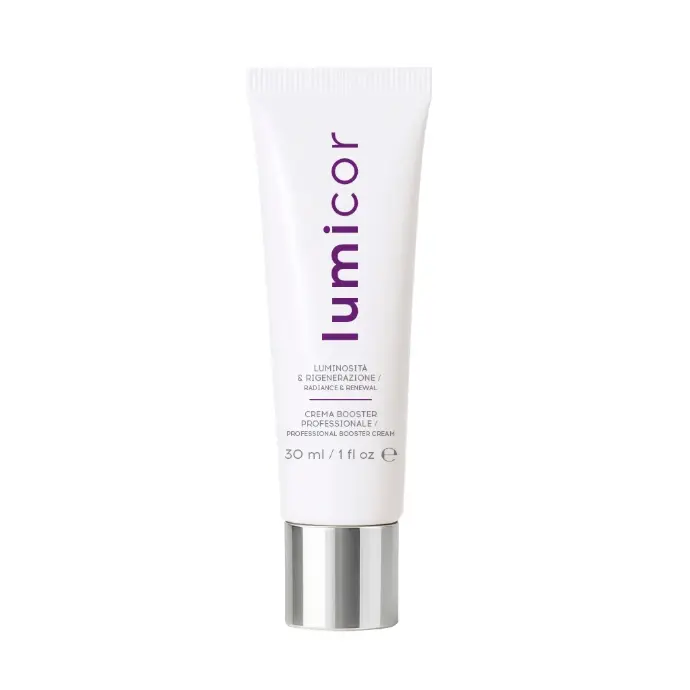
Lumicor usage protocol: optimal results
Apply in the evening on clean and perfectly dry face, avoiding eye contour. In the first 2 weeks use 3 times/week to favor skin adaptation, then increase to daily if tolerated. Wait 15 minutes before applying moisturizer if needed. Mandatory SPF 50 in the morning.
Expected results timeline
Weeks 1-2: skin adaptation, possible mild transitory erythema.
Weeks 3-4: beginning reduction of post-inflammatory erythema, smoother texture.
Weeks 4-8: progressive spot brightening, tone evening.
Weeks 8-12: maximum result with significant hyperpigmentation reduction and texture improvement.
Frequently asked questions
Is third-generation retinoid better than retinol?
Yes, significantly. Oleyl adapalenate offers superior efficacy with 70% less irritation compared to 0.5% retinol. RAR-γ receptor selectivity guarantees excellent anti-acne and anti-hyperpigmentation results without the typical retinol erythema and desquamation. Additionally it is photostable, while retinol degrades in light.
How long does it take to see results?
For hyperpigmentation: first tone evening in 3-4 weeks, visible spot brightening in 6-8 weeks, maximum result in 12 weeks.
For acne: comedone reduction in 4 weeks, inflammatory lesion improvement in 6-8 weeks.
For texture/wrinkles: initial smoothing 6-8 weeks, significant improvement 12-16 weeks.
Can I use it during pregnancy?
No. Systemic retinoids are teratogenic, and although topical absorption is minimal, adapalene is classified FDA category C (risk not excludable). Contraindicated in pregnancy and breastfeeding as precautionary principle. Safe alternatives in pregnancy: azelaic acid, vitamin C, niacinamide.
Should I use SPF even if I apply only in the evening?
Absolutely yes. The retinoid accelerates cell turnover making superficial layers temporarily more vulnerable to UV damage. Daily SPF 50 is mandatory for the entire treatment duration and ideally always, to prevent new hyperpigmentation. Photoprotection is an integral part of every brightening therapy.
Can I use it with vitamin C?
Yes, but separately. Optimal protocol: vitamin C in the morning (daytime antioxidant + additional UV protection) and oleyl adapalenate in the evening (nighttime regenerative work). Applying them together could cause irritation from sum of exfoliating actives. Morning/evening separation optimizes benefits of both.
Scientific studies: what research says
Study 1: adapalene vs tretinoin efficacy in acne
12-week multicenter randomized study compares 0.1% adapalene gel vs 0.025% tretinoin gel in 147 patients with acne. Comparable efficacy in reducing comedones (-46% vs -43%) and inflammatory lesions (-44% vs -40%), but adapalene caused significantly less erythema, desquamation and burning.
Shalita et al., Journal of the American Academy of Dermatology, 1996
Study 2: adapalene tolerability superior to retinol
Comparative in vitro and in vivo study documents that 0.1% adapalene causes 70% less irritation compared to 0.5% retinol. RAR-γ receptor selectivity explains maintained anti-comedogenic efficacy with drastic reduction of typical non-selective retinoid side effects.
Verschoore et al., British Journal of Dermatology, 1999
Study 3: adapalene vs tretinoin photostability
Spectrophotometric analysis demonstrates that adapalene maintains 90% activity after 24-hour UV light exposure, while tretinoin loses 80% activity in 2 hours. Photostability allows daytime use and guarantees superior shelf-life in cosmetic formulations.
Thielitz et al., Photodermatology, Photoimmunology & Photomedicine, 2008
Study 4: adapalene enhances brightener efficacy
Studio clinico di 24 settimane su melasma confronta la tripla terapia (fluocinolone + idrochinone + tretinoina) vs doppia (idrochinone + adapalene). Il gruppo con adapalene ha mostrato un'efficacia comparabile ma una tollerabilità significativamente superiore, con minor rischio di dermatite irritativa che peggiora l'iperpigmentazione.
Chan et al., Journal of Drugs in Dermatology, 2008
Study 5: molecular anti-inflammatory mechanism
Research documents that adapalene inhibits the arachidonic acid pathway and production of pro-inflammatory leukotriene B4. This mechanism explains efficacy in inflammatory acne and prevention of post-inflammatory hyperpigmentation, advantage over classic retinoids.
Sorg et al., British Journal of Dermatology, 2006
Conclusions: why choose oleyl adapalenate
The third-generation retinoid represents the optimal scientific evolution of vitamin A derivatives. RAR-γ receptor selectivity guarantees maximum anti-comedogenic and renewing efficacy with minimal irritation. Oleyl lipophilic esterification increases penetration and tolerability. Photostability allows flexibility of use. Direct anti-inflammatory action makes it ideal for post-inflammatory hyperpigmentation.
For professional hyperpigmentation treatment, the synergy of oleyl adapalenate with high-bioavailability tranexamic acid and ultra-pure tetrahydrocurcumin offers superior results through complementary mechanisms, as demonstrated by the Lumicor formulation.