
After each laser hair removal session with alexandrite, the skin reacts predictably: localized redness around the follicles, a sensation of heat, and sometimes a slight burning sensation. This isn't a side effect to be feared, but a physiological response that depends on how this type of laser works. Understanding the mechanism helps you better manage recovery and properly care for your skin, session after session.
How the alexandrite laser works
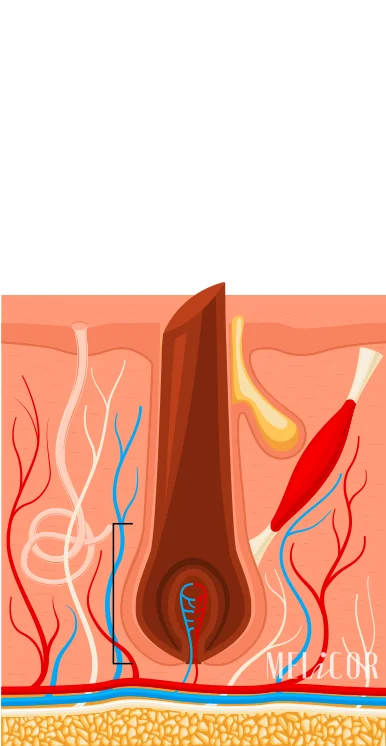
Laser energy absorption
The melanin present in the hair follicle absorbs the light energy of the laser.
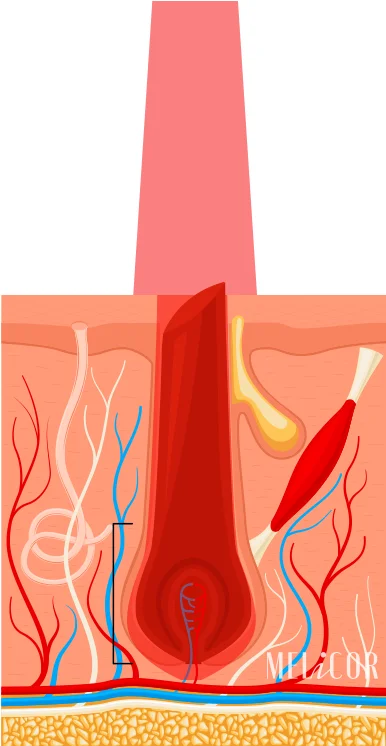
Conversion into heat
Light energy is converted into heat energy, which heats the hair follicle to temperatures of up to 70°C.
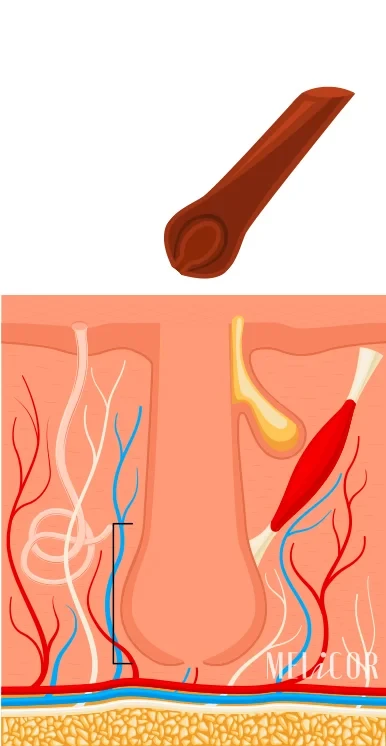
Damage to the hair follicle
Heat damages the cells of the hair matrix in particular, thus preventing regrowth.
The alexandrite laser emits light with a wavelength of 755 nanometers. This wavelength corresponds to the peak absorption of melanin, the pigment that determines hair color. The underlying physical principle is selective photothermolysis: light energy is preferentially absorbed by the melanin contained in the hair follicle, converting it into heat and destroying the follicle without damaging surrounding tissue.
The precision of this mechanism is the main strength of alexandrite compared to other laser hair removal systems. At 755 nm, melanin absorption is the highest of all wavelengths used in laser hair removal: this translates into high efficacy from the first sessions, but also a more intense thermal reaction on the skin. This is why post-session burning and redness are more pronounced than with other types of lasers. This is not skin damage, but the direct consequence of a highly effective action on the follicle.
Alexandrite systems feature a built-in cooling device (cryogen or contact) that reduces discomfort during the procedure and limits surface thermal reaction. However, the phase immediately following the session remains the most delicate.
Who is it suitable for: phototypes and hair characteristics
The alexandrite laser is indicated for skin types I to IV according to the Fitzpatrick skin type scale. It works best on light to medium skin with dark hair, where the contrast between the melanin in the hair and that in the skin is greater. For skin types V and VI, the risk of post-inflammatory hyperpigmentation is too high: in these cases, other laser systems, such as the 1064 nm Nd:YAG, are preferable.
Regarding hair color, alexandrite produces the best results on brown and black hair. No melanin-based laser, regardless of technology, is effective on light blonde and gray hair. Red hair is a special case: it contains pheomelanin instead of eumelanin, which reduces absorption compared to dark hair. Its effectiveness on red hair is not comparable to that on brown hair, but among the available laser systems, alexandrite tends to provide better results than diode and Nd:YAG, precisely because its wavelength is closer to the absorption peak of pheomelanin. It's important to communicate this to the patient before starting the treatment to set realistic expectations.
Skin phototypes not only determine the indication for the procedure, but also influence the post-session care protocol and the need for pigmentation prevention.
What to Expect: The Stages of Recovery
Recovery after alexandrite laser hair removal is generally quick, but requires attention in the first 72 hours.
Immediately after the session and in the first 24 hours, the most common reaction is perifolicular erythema: a localized redness around each treated follicle, often accompanied by mild swelling and a burning or warming sensation. This is precisely the sign that the laser has worked effectively. The intensity of the reaction depends on hair density, the treated area (more vascularized areas such as the groin and armpits react more intensely), the skin type, and the session parameters. Applying a soothing product immediately after the procedure, even in the office, is the first step to reduce discomfort and support the skin's response.
On days 2 and 3, the erythema gradually subsides. Some people notice slight scaling or the appearance of small dark spots where the follicles are located: these are hairs starting to grow out of the skin, not an infection or damage. The skin may remain slightly sensitive to the touch.
Between days 4 and 10, the treated hairs fall out spontaneously. They should not be removed: this is a natural shedding, not regrowth. During this phase, it is essential to continue protecting the area with a mineral sunscreen whenever it is exposed to sunlight, even on cloudy days. Post-laser skin is more sensitive to UV radiation, and the risk of hyperpigmentation is real.
From the second week onwards, the skin returns to normal completely. If the treatment cycle is underway, this is the phase in which the skin prepares for the next session.
Post-laser hair removal care protocol
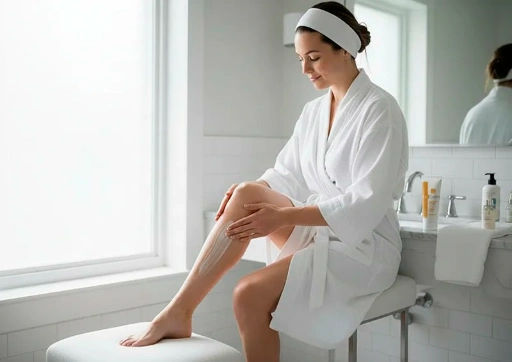
A structured treatment protocol isn't an add-on; it's an integral part of the treatment. Without proper care, results risk being compromised by prolonged inflammatory reactions or, in more severe cases, post-inflammatory discoloration.
Step 1: Gentle cleansing
For the first 24 hours, simply rinse the treated area with warm water, without any products. From the next day, you can wash normally, but with a gentle mallow facial cleanser for sensitive skin or an equivalent product formulated for reactive skin. Cleansers with harsh surfactants, SLS, fragrances, or exfoliating acids should be avoided in the first two weeks: they alter the skin barrier, which is already weakened by the thermal reaction.
Step 2: Soothing and repairing cream
Immediately after the procedure, already in the office, a soothing post-laser cream should be applied able to calm erythema, reduce burning and support the skin barrier. Immediate action is what makes the difference in the intensity and duration of the reaction.
For the following days at home, the same cream should be reapplied twice a day to the treated areas, morning and evening, until the skin has completely normalized. The home-use formulation is available in a 200 ml format, designed to cover large areas of the body such as legs, back, or arms for the entire duration of the treatment cycle.
Step 3: Sunscreen
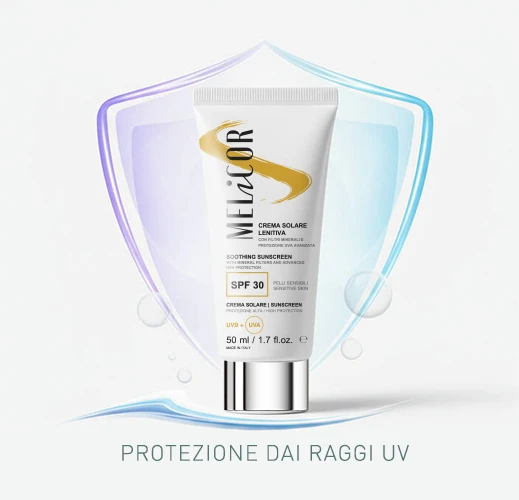
After each laser hair removal session, sunscreen on the treated areas isn't recommended; it's mandatory. Post-laser skin is temporarily more vulnerable to UV radiation, and unprotected exposure is the main cause of post-inflammatory spots that appear after treatment. For the body, a mineral sunscreen with SPF 30 and physical filters is preferable to a chemical one because it doesn't require skin absorption and is well tolerated even by reactive skin. For the face, it is recommended to use an SPF 50.
How to prevent post-laser hyperpigmentation
Post-inflammatory hyperpigmentation (PIH) is one of the most common complications of laser hair removal with alexandrite, especially in skin types III and IV. It occurs when the skin's inflammatory response abnormally activates melanocytes, producing dark spots in the treated areas.
The main risk factors are skin type (the darker it is, the greater the risk), sun exposure in the weeks following the session, and individual predisposition. Those who have already developed post-inflammatory spots in the past, even following other skin trauma, are at higher risk.
Prevention starts with constant sun protection, but in at-risk individuals it may be useful to support the skin with a precision depigmenting agent starting from the second or third session. A product based on tranexamic acid acts upstream of the melanogenic cascade, reducing the stimulation of melanocytes without irritating the skin. Lumicor combines tranexamic acid and other depigmenting agents in a formula designed for sensitive post-procedure skin.
To delve deeper into the topic, the article onpost-laser hyperpigmentation describes in detail the formation mechanism and treatment strategies.
Alexandrite vs. diode laser hair removal: which should you choose?
This is one of the most frequently asked questions before starting a laser hair removal treatment. The answer depends on several variables, and there is no universally superior option.
The 755 nm alexandrite laser has the advantage of extremely high melanin selectivity: it acts more rapidly on the follicle and may require slightly fewer sessions for very dark hair. It covers large areas of the body quickly. The intensity of the post-session skin reaction tends to be more pronounced than with diode lasers.
Diode lasers typically operate at 808 nm or 810 nm, a wavelength with slightly lower melanin absorption but deeper dermis penetration. This makes them more versatile for skin types III and IV, where the risk of skin reactions must be managed more carefully.
For skin types I and II with dark hair, alexandrite is generally the most effective choice. For skin types III and IV, diode often offers a better risk/efficacy profile. For red hair, alexandrite tends to provide slightly superior results to diode. The final decision should always be made by a doctor or qualified professional, based on an individual assessment of the skin and hair.
Frequently asked questions
How many sessions are needed for laser hair removal with alexandrite?
The number depends on the area treated, hair color and density, and individual response. On average, 6 sessions are considered for the main body areas, with 4-week intervals for the face and 6-week intervals for the body. Hormone-dependent areas (groin, armpits, chin) may require additional sessions or maintenance sessions over time.
Does laser hair removal with alexandrite hurt?
La sensazione durante la seduta è descritta comunemente come un pizzico rapido o uno schiocco, ripetuto per ogni impulso. Il sistema di raffreddamento integrato riduce il disagio in modo significativo. L'intensità dipende dalla zona: le aree con peli più densi o maggiormente vascolarizzate (inguine, ascelle, zona bikini) sono percepite come più intense. La fase post-seduta, con bruciore e calore residuo, dura generalmente alcune ore.
What should I not do after laser hair removal with alexandrite?
During the first 48 hours: avoid hot baths, saunas, chlorinated pools, and intense physical activity that causes profuse sweating. During the first 2 weeks: avoid direct sun exposure on the treated areas, do not mechanically exfoliate the skin, and do not use products containing acids or retinol.
When can I expose myself to the sun after the session?
No sooner than two weeks after the last session, and always use a high-factor sunscreen on the treated areas. Ideally, planning your hair removal program in the fall and winter months significantly reduces the risk of hyperpigmentation. Summer is not an absolute contraindication, but it does require more rigorous sunscreen management.
The alexandrite laser works on light hair?
Not effectively. Very light blonde, gray, and white hairs do not contain enough melanin to selectively absorb laser energy. No melanin-based laser technology is effective on these hairs. Red hairs are an intermediate case: they contain pheomelanin, not eumelanin, and respond less effectively than dark hairs. Alexandrite, however, offers better results than other laser systems available for this hair type.
Can I get alexandrite laser hair removal in the summer?
Yes, with the appropriate precautions. Skin must be untanned at the time of the session, and in the weeks following treatment, the treated areas must be protected with a high SPF whenever exposed to the sun. This is not an absolute contraindication, but it does require discipline in sun protection to avoid post-inflammatory reactions or blemishes.
The post-laser hair removal kit
For those who prefer to have recovery products ready, a complete post-laser hair removal kit includes a soothing cream, gentle cleanser, and sunscreen in a format designed to last through the entire treatment cycle. Three products, one ready-made protocol.
Want to learn more about the differences between laser techniques? Read the article on ablative and non-ablative lasers for a complete overview of available technologies.