
Laser hair removal has become one of the most popular methods for permanent hair removal. However, many people notice skin redness after treatment and wonder if this is normal. In this article, we'll explore the scientific causes of post-laser erythema, how long it lasts, and the most effective remedies based on clinical evidence.
What is post-laser erythema?
Erythema, or skin redness, is the most common skin reaction after laser hair removal. It manifests itself as:
- Diffuse redness in the treated area
- Sensation of heat similar to a mild sunburn
- Perifollicular edema (mild swelling around the follicles)
- Increased skin sensitivity
According to studies published, post-laser erythema occurs in over 90% of patients and represents a normal physiological reaction to treatment.
Why does redness occur? The science behind the phenomenon
The mechanism of action of the laser
Laser hair removal works through the principle of selective photothermolysis:
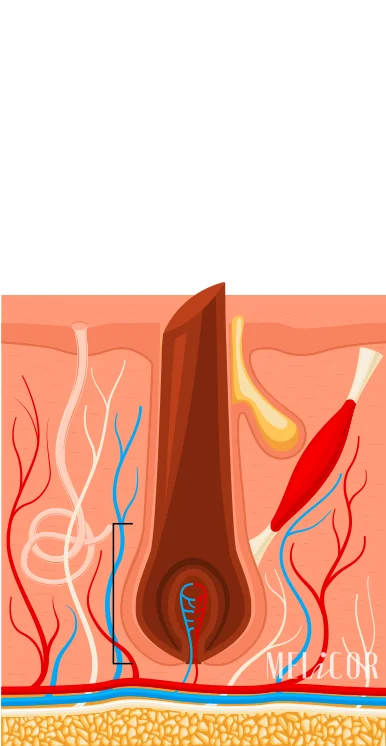
Laser energy absorption
The melanin present in the hair follicle absorbs the light energy of the laser (wavelengths between 600-1200 nm).
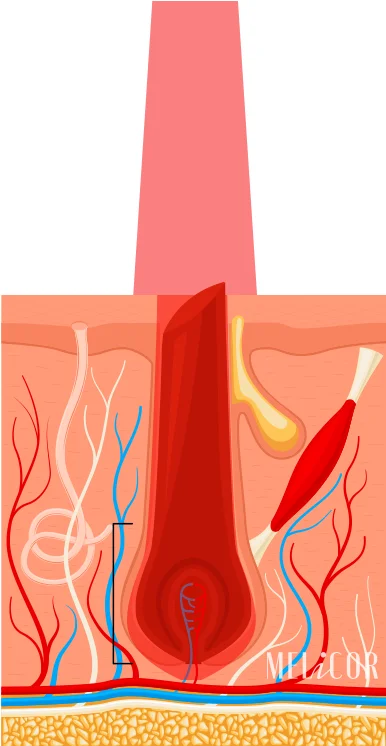
Conversion to heat
Light energy is converted into heat energy, heating the follicle to temperatures of 60-70°C.
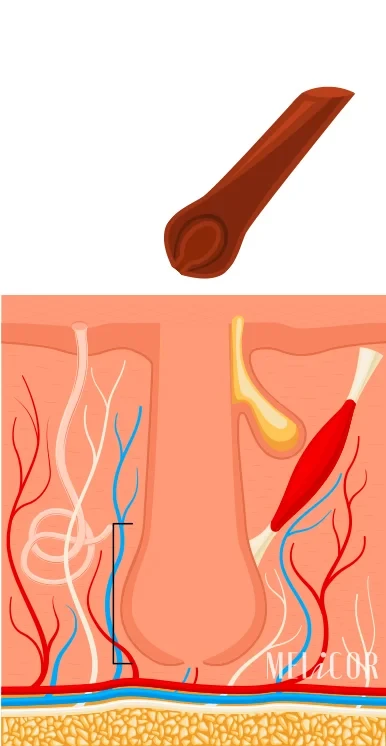
Follicle damage
Heat selectively damages the cells of the hair matrix, preventing hair regrowth.
Why does erythema occur?
Scientific research has identified several mechanisms that cause redness:
1. Capillary vasodilation
As documented in optical spectroscopy studies published in the Journal of Lasers in Medical Sciences, erythema is caused by:
- Increased blood flow in the subcutaneous capillaries
- Hyperemia (blood congestion) in the superficial dermal layers
- Dilation of blood vessels in response to heat
2. Inflammatory response
The laser process triggers a natural inflammatory cascade:
- Release of pro-inflammatory mediators (histamine, prostaglandins)
- Activation of the skin's immune system
- Migration of inflammatory cells into the treated area
This response is essential to the healing process and should not be considered negative.
3. Controlled thermal damage
Even when the laser parameters are optimal, some degree of:
- Heating of the surrounding epidermis
- Activation of pain and temperature receptors
- Stimulation of local microcirculation
Factors that influence the intensity of erythema
1. Skin type (Fitzpatrick scale)
According to studies published in the Journal of the American Academy of Dermatology:
- Phototypes I-III (light skin): Erythema more visible but generally less long-lasting
- Phototypes IV-VI (dark skin): Higher risk of side effects if correct parameters are not used
In detail: Fitzpatrick skin phototypes.
2. Laser parameters
The intensity of the erythema depends on:
- Fluence (energy density, measured in J/cm²)
- Pulse duration))
- Spot size
- Cooling system used
3. Anatomical area treated
Some areas are naturally more sensitive:
- Face: Thinner skin, greater vascularization
- Armpits and groin: More delicate skin
- Legs and arms: Generally less sensitive
4. Individual characteristics
- Hair Density and Thickness: Darker, thicker hair absorbs more energy
- Individual skin sensitivity
- Skin conditions (hydration, presence of pre-existing irritations)
How long does the redness last?
Normal erythema timeline
Based on clinical evidence from multiple studies:
In the first 2-4 hours:
- Intense erythema and perifollicular edema
- Sensation of heat similar to mild sunburn
- Possible sensitivity to touch
24-48 hours:
- Progressive reduction of redness
- Reduction of edema
- Sensitivity normalization
48-72 hours:
- In most cases, complete resolution
- Skin returns to its normal appearance
- Possible slight flaking
Special cases:
- In some patients with sensitive skin, erythema may persist for up to 1-2 weeks
- Erythema persisting beyond 2 weeks requires medical evaluation
Normal erythema vs. complications: when to worry
Normal reactions
✅ Not to worry:
- Uniform redness in the treated area
- Mild perifollicular edema
- Sensation of heat
- Small bumps around the follicles
- Slightly dry skin
Warning signs
⚠️ Consult a doctor if you experience:
- Erythema reticulatum (persistent net-like pattern)
- Blisters or blisters
- Crusts or erosions
- Purpura (purple spots)
- Severe, uncontrollable pain
- Signs of infection (pus, excessive heat, fever)
- Significant pigmentation changes
- Severe folliculitis that does not respond to treatment
Effective remedies based on scientific evidence
Immediate management (first 24 hours)
1. Skin cooling
Why it works: cold reduces vasodilation and inflammation.
How to apply it:
- Cold compresses (not ice directly on the skin)
- 10-15 minutes every 2-3 hours
- Refrigerated gels
- Cold thermal sprays
Evidence: studies show that immediate cooling reduces erythema by 30-40%
2. Application of soothing sreams
Scientifically proven ingredients:
Panthenol (pro-Vitamin B5)
- Mechanism: Stimulates cell regeneration, reduces inflammation
- Evidence: Studies show reduction of erythema and acceleration of healing
- Effective concentration: 2-5%
Aloe Barbadensis (Aloe Vera)
- Mechanism: anti-inflammatory effect, stimulates collagen production
- Properties: moisturizing, refreshing, healing
- Use: 98-100% pure gel or dermatological formulations
Bisabolol (alpha-bisabolol)
- Mechanism: inhibitor of the synthesis of inflammatory mediators
- Properties: anti-inflammatory, antimicrobial, antioxidant
- Origin: extracted from German chamomile
Hyaluronic acid
- Mechanism: deep hydration, maintenance of the skin barrier
- Benefits: reduces post-laser dryness, promotes healing
Allantoin
- Mechanism: soothing and protective effect
- Properties: softening, promotes cell regeneration
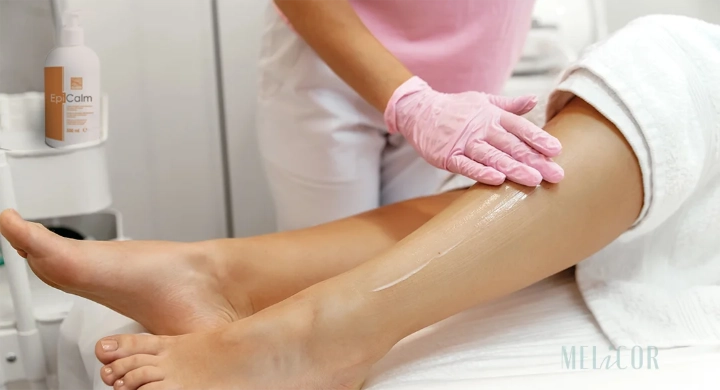
3. Topical corticosteroids (under medical supervision)
According to guidelines published on StatPearls - NCBI Bookshelf, corticosteroids may be used in selected cases to reduce severe symptoms of burning, swelling, and skin irritation.
- Note: only on prescription and medical supervision
Long-term care (days 2-14)
1. Intensive hydration
Key Ingredients:
- Ceramides (skin barrier reconstruction)
- Glycerin (humectant)
- Squalane (mild emollient)
- Shea butter (for very dry skin)
Frequency: 2-3 times a day, especially after showering
2. Strict sun protection
Crucial for preventing post-inflammatory hyperpigmentation
Recommendations:
- SPF 50+ broad spectrum
- Preferred physical filters (zinc oxide, titanium dioxide)
- Reapplication every 2-3 hours
- Avoid direct sun exposure for 2 weeks
3. Products to avoid
ABSOLUTELY NOT in the first 48-72 hours:
- Retinoids
- Exfoliating acids (AHA, BHA, glycolic acid)
- Benzoyl peroxide
- Perfumes and alcohol
- Abrasive products or scrubs
Advanced dermatological treatments
For persistent erythema or post-acne erythema, dermatologists may use:
Pulsed Dye Laser (PDL)
- Gold standard for treating persistent erythema
- Wavelength: 585-595 nm
- Target: Oxyhemoglobin in blood vessels
- Results: 50-75% reduction in erythema in 1-3 sessions
Nd:YAG laser (1064 nm)
- Effective for deeper blood vessels
- Combined with low doses of isotretinoin in severe cases
IPL (Intense Pulsed Light)
- Treatment of large areas
- Requires multiple sessions
In detail: photorejuvenation
Recommended post-laser care protocol
First day (0-24 hours)
DA FARE:
- Apply cold compress (15 min every 2-3 hours)
- Cleanse gently with a fragrance-free product
- Apply soothing cream (Panthenol + Aloe + Bisabolol)
- Wear loose, breathable clothing
- Avoid intense physical activity
- Do not touch or scratch the area
TO AVOID:
- Hot water (only warm or cold)
- Sauna, Turkish bath, swimming pool
- Sun exposure
- Irritating products
- Makeup (if possible)
- Sports and excessive sweating
Days 2-7
TO DO:
- Continue hydration 2-3 times/day
- SPF 50+ sunscreen (even in the city)
- Shower with warm water
- Gentle detergents with neutral pH
TO AVOID:
- Hair removal with wax or tweezers
- Direct sun exposure
- Swimming pool with chlorine
- Exfoliants and scrubs
Weeks 2-4
DA FARE:
- Maintain daily hydration
- Continuous sun protection
- Monitor your skin for changes
TO AVOID:
- Tanning (solar or artificial)
- Aggressive treatments
FAQ - Frequently Asked Questions
Is it normal to have redness after each session?
Yes, it's completely normal. Erythema is an expected physiological response. However, the intensity should remain similar between sessions. If it increases significantly, inform your doctor.
Is the rash more intense in some areas of the body?
Yes. The face, armpits, and groin tend to have more noticeable reactions because the skin is thinner and more vascularized.
Can I speed up my healing?
Partially. Immediate application of soothing creams with specific ingredients (panthenol, aloe, bisabolol) can reduce the intensity and duration of redness by 20-30%.
When can I resume my normal skincare routine?
After 48-72 hours for gentle products. Wait 7-10 days for retinoids and exfoliating acids.
Does post-laser erythema leave permanent stains?
Generally not, if managed properly. Strict sun protection prevents post-inflammatory hyperpigmentation.
What to do if the rash lasts more than 2 weeks?
Consult your dermatologist. An evaluation may be necessary to rule out complications or to consider specific treatments.
The role of Epicalm in the management of post-laser erythema
Epicalm is specifically formulated to meet the needs of the skin after laser treatments:
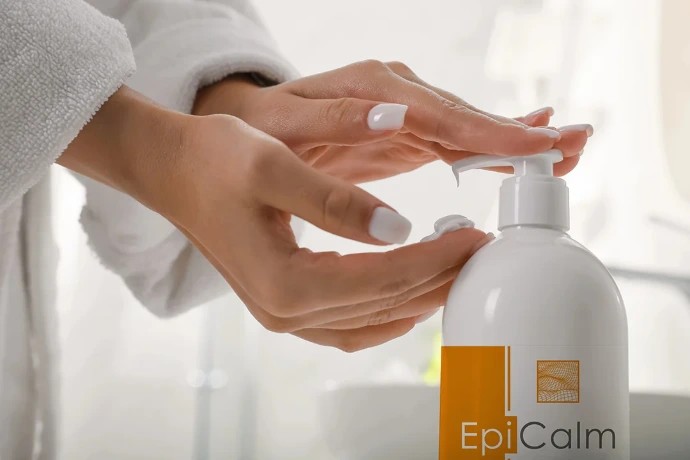
Use Epicalm immediately after laser hair removal
Scientific formulation:
- Anti-inflammatory effect
- Reduces burning sensation
- Hydrates
- Promotes regeneration
- 88% ingredients of natural origin
EPICALM
Application time:
- Immediately after the procedure (in the office)
- 2-3 times a day at home
- In the first 3-5 days post-treatment

Professional format + home use: Two formulations to cover all stages of recovery
Epicalm Plus - for more intense treatments
For more aggressive laser procedures (fractional laser resurfacing, photorejuvenation, vascular photocoagulation):
Additional features:
- Lighter and non-comedogenic base
- Ideal for face and delicate areas
- Intensive repairing action
- Also usable for sunburn
- Prevention of hyperpigmentation
Conclusion
Redness after laser hair removal is a normal and expected physiological reaction, caused by capillary vasodilation and the natural inflammatory response to the treatment. Understanding the scientific mechanisms behind erythema and applying evidence-based treatment protocols allow us to:
✅ Reduce the intensity of redness by 30-40%
✅ Speed up recovery times
✅ Prevent complications
✅ Maintain optimal results
Key points to remember:
- The rash usually lasts 24-72 hours
- Cooling and soothing creams are essential
- Sunscreen prevents hyperpigmentation
- Key Ingredients: Panthenol, Aloe, Bisabolol
- Consult a doctor if the rash persists for more than 2 weeks.
With the right care and specific products like Epicalm, the post-laser experience can be managed effectively, allowing you to enjoy the benefits of smooth, hair-free skin with minimal discomfort.
Medical Note: the information in this article is for educational purposes only. If you have any concerns or unusual symptoms, always consult a qualified dermatologist.
Scientific references
This article is based on research published in:
- National Center for Biotechnology Information (NCBI/PubMed)
- Journal of the American Academy of Dermatology
- Journal of Lasers in Medical Sciences
- StatPearls - NCBI Bookshelf
- Journal of Cosmetic Dermatology