
Quick Facts
Efficacy: ★★★★★
Safety: ★★★★★
Value for Money: ★★★★☆
Scientific Research: ★★★★★
For Skin Type: All types, ideal for sensitive, stressed, compromised
Tipe: Extremolyte (natural stress protection molecule), cyclic amino acid derivative
Primary Function: Cellular protector, protein/membrane stabilizer, anti-inflammatory, DNA shield
Suitable for: Environmental stress, UV damage, pollution, sensitivity, barrier compromised
What is ectoin: extremolyte definition and origin
Survival molecule from extreme environments
Ectoin is a cyclic amino acid derivative (1,4,5,6-tetrahydro-2-methyl-4-pyrimidine carboxylic acid) produced by extremophile microorganisms living in extreme conditions: high salinity (salt lakes, Dead Sea), extreme temperatures (-20°C to +80°C), intense UV radiation, desiccation. The halophilic bacterium *Halomonas elongata*, isolated from Egyptian salt lakes, is the primary source for commercial ectoin production via biotechnological fermentation.
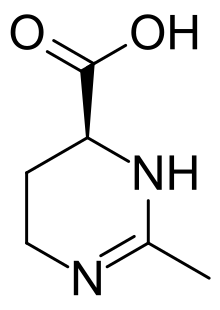
Ectoine chemical formula.
Molecular mechanism: protein and membrane stabilization
Chimicamente, l'ectoin (acido 1,4,5,6-tetraidro-2-metil-4-pirimidincarbossilico) è un osmolita compatibile. Questa classe di molecole protegge le cellule mantenendo l'equilibrio osmotico senza interferire con le funzioni cellulari normali. A differenza di altri osmoliti (come l'urea o i sali), l'ectoin non denatura le proteine né altera il pH, rendendolo ideale per applicazioni cosmetiche e dermatologiche.
Biocompatibility and natural presence
L'ectoin cosmetico è prodotto attraverso la fermentazione biotecnologica controllata di Halomonas elongata in bioreattori. Questo processo sostenibile garantisce un'elevata purezza, una tracciabilità completa e l'assenza di contaminanti. La molecola finale è identica a quella naturale, con un profilo di sicurezza eccezionale e una stabilità superiore rispetto a molti attivi botanici.
How ectoin works on skin
Cellular protection: molecular shield mechanism
Ectoin protects cells at fundamental level creating "preferential hydration layer": surrounds biomolecules (proteins, lipids, DNA) with organized water, stabilizes three-dimensional structure preventing denaturation, protects from stress-induced conformational changes, maintains optimal enzymatic activity. Result: cells function normally despite UV, pollution, desiccation, temperature extremes. Studies document +15-20°C increase in protein denaturation temperature with ectoin.
DNA protection: anti-mutagenic shield
Ectoin offers remarkable DNA protection: reduces UV-induced DNA damage (thymine dimers) by 70% in treated fibroblasts, protects from oxidative DNA damage by pollution and free radicals, prevents telomere shortening (cellular aging marker), reduces mutations and chromosomal aberrations. Mechanism: ectoin stabilizes DNA double helix structure making it more resistant to damaging agents. This translates to photoaging prevention and skin cancer risk reduction.
Anti-inflammatory action: comparable to hydrocortisone
L'ectoin inibisce il rilascio di citochine pro-infiammatorie (IL-1α, IL-6, IL-8, TNF-α) e downregola l'espressione di marker infiammatori. Studi clinici mostrano una riduzione significativa di eritema, prurito e sensazione di bruciore nella dermatite atopica, nella pelle sensibile reattiva, nel post-laser. L'effetto è comparabile a quello dell'idrocortisone all'1% ma senza gli effetti collaterali corticosteroidei.
Barrier repair: lipid synthesis and TEWL reduction
Ectoin actively repairs compromised barrier: stimulates ceramide synthesis increasing barrier lipid density +35% after 4 weeks, reduces transepidermal water loss (TEWL) by 25%, increases expression of structural proteins (filaggrin, involucrin, loricrin), normalizes keratinocyte differentiation restoring stratum corneum organization. This combination creates robust, resilient barrier resistant to environmental stress.
Pollution protection: anti-particulate shield
Recent studies reveal ectoin's efficacy against urban pollution: reduces fine particulate (PM2.5, PM10) deposition on skin by 50%, decreases inflammatory markers induced by diesel particles by 60%, prevents heavy metal (cadmium, lead) penetration, neutralizes free radicals generated by air pollution. Mechanism: ectoin creates protective film on skin surface acting as physical and chemical barrier against pollutants.
What ectoin is used for: applications
Environmental stress protection: urban shield
For skin exposed to environmental aggressors (UV, pollution, wind, air conditioning): preventive protection against chronic oxidative stress, reduction of cumulative environmental damage, preservation of cellular functionality under stress, prevention of stress-induced premature aging. Apply ectoin serum morning before SPF as multi-level defense: ectoin protects cells, SPF blocks UV.
Sensitive and reactive skin: stabilization and calming
Trial controllati documentano che creme con ectoin migliorano significativamente lo SCORAD (indice di gravità della dermatite atopica) comparabilmente all'idrocortisone all'1% senza effetti collaterali. Riduzione di prurito, eritema, xerosi e lesioni. Meccanismo: azione anti-infiammatoria + rafforzamento della barriera + riduzione della permeabilità agli allergeni.
Atopic dermatitis and eczema: hydrocortisone alternative
For atopic skin with chronic inflammation: clinical efficacy comparable to 1% hydrocortisone without side effects (no thinning, tolerance, rebound), significant SCORAD (severity score) reduction in 4-6 weeks, decreased itching and sleep disturbances, maintained long-term without tolerance development. Concentration in emollient cream base, apply 2-3x/day on affected areas.
Post-procedure accelerated recovery
After aggressive dermatological procedures (laser, deep peels, microneedling): reduces persistent erythema by 40-50%, accelerates re-epithelialization protecting stressed cells, prevents hyperpigmentation by stabilizing melanocytes, minimizes downtime maintaining cellular functionality. Apply ectoin serum 24-48 hours post-procedure (verify with dermatologist), continue 2 weeks.
Photoaging prevention: DNA and collagen protection
For intensive anti-aging protection: prevents 70% UV-induced DNA damage (mutations, thymine dimers), protects collagen and elastin from degradation, reduces MMP (matrix metalloproteinase) expression breaking down collagen, prevents glycation and carbonylation of dermal proteins. Synergy with liposomal silymarin + SPF for maximum photoprotection.
Ectoin and other actives: synergies
Synergy with retinoids: optimized tolerance
Ectoin is the ideal companion for retinoids. While oleyl adapalenate accelerates cell turnover (potentially irritating), ectoin stabilizes membranes, reduces inflammation and strengthens the barrier compromised by the retinoid. Result: significantly improved tolerance, less erythema, less desquamation.
Enhancement of sensitizing brighteners
The combination of ectoin with brighteners like tetrahydrocurcumin and tranexamic acid offers double advantage: brighteners work on melanogenesis while ectoin prevents reactive hyperpigmentation caused by inflammation or cellular stress. Protection during the brightening process.
Ideal complementary pairings
Works excellently with: hyaluronic acid (enhanced hydration), niacinamide (double barrier action), ceramides (lipid strengthening), antioxidants (vitamin C, E, resveratrol), reparative peptides. Ectoin doesn't chemically interfere with any common ingredient, maximum formulation versatility.
Protection for aggressive procedures
Professional protocol: apply ectoin before and after peels, laser, microneedling. Pre-treatment: prepares skin by reducing baseline inflammation. Post-treatment: accelerates healing, prevents complications. Combined with mandatory SPF 50, significantly reduces post-inflammatory hyperpigmentation risk.
Is it safe? Side effects and contraindications
Exceptional safety: biomimetic nature
Ectoin has impeccable safety profile thanks to biomimetic nature: naturally present in human tissues (trace endogenous), completely biocompatible with all cell types, biodegradable without toxic residues, no known mutagenic, carcinogenic or teratogenic effects. Decades of dermatological use without significant problems reported. One of safest cosmetic actives available.
Universal tolerability: 0% sensitization
Extensive safety studies document: patch test on 500+ subjects including sensitive/atopic skin: 0% allergic sensitization, primary irritation test: non-irritant even at 5%, RIPT (repeat insult patch test): zero contact sensitization, phototoxicity and photosensitization: negative. Ectoin is among most tolerated ingredients, comparable only to glycerin and [panthenol](/blog/ingredients/panthenol-provitamin-b5).
Approved for extreme conditions
Ectoin tolerability is so high it's approved for: pediatric products including infants, atopic dermatitis and severe eczema, post-surgical and burn products (abraded skin application), ophthalmic products (eye drops, contact lens solutions). This versatility testifies absolute safety even in extreme conditions where most ingredients would be contraindicated.
Safe in pregnancy and breastfeeding
L'ectoin è una molecola naturale, biocompatibile, non sistemica (assorbimento transdermico trascurabile). Utilizzato in colliri e spray nasali anche in gravidanza. Sebbene i dati specifici sull'applicazione topica in gravidanza siano limitati, il profilo tossicologico favorevole e l'assenza di effetti sistemici suggeriscono sicurezza. Sempre consigliabile una consulenza medica preventiva.
No documented contraindications
Systematic literature reviews identify no absolute contraindications to topical ectoin. Only theoretical precaution: known allergy to ectoin itself (extremely rare, <0.001% population, practically non-existent). In case of doubt, patch test on inner forearm: apply pure ectoin, cover, check after 24-48h. Absence of erythema/itching confirms tolerance.
The best products with ectoin from Melicor
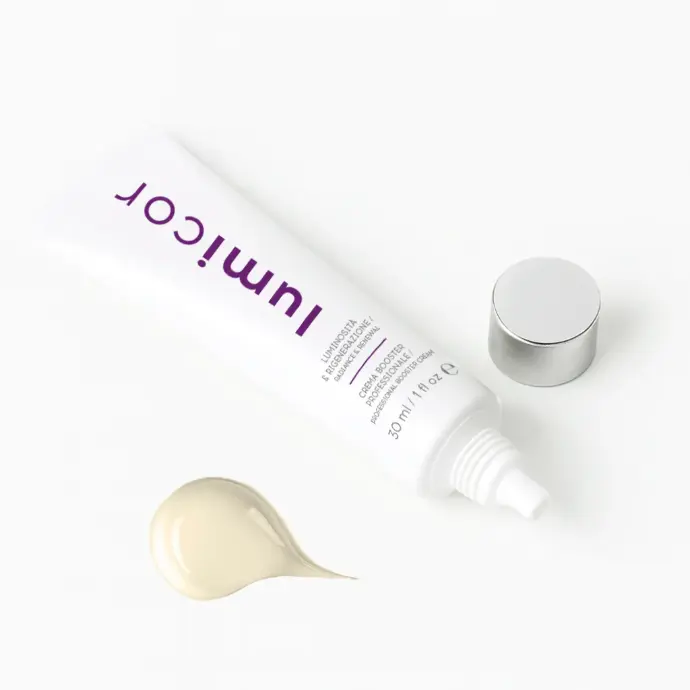
Lumicor: ectoin as cellular guardian
Lumicor professional booster cream contains ectoin with critical strategic function in intensive brightening context: protect melanocytes from stress preventing reactive hyperpigmentation, stabilize cells during accelerated turnover from retinoid, maintain barrier integrity despite multiple intensive actives, reduce inflammation amplifying pigmentation.
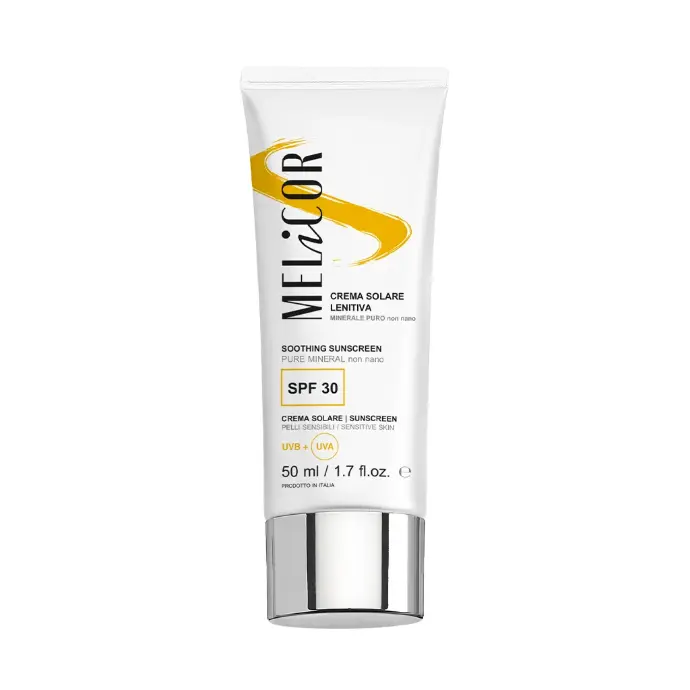
Hydrating face sunscreen SPF 50 for sensitive skin
SPF 50 face cream: sun protection for sensitive skin with ectoin and hyaluronic acid.
- light consistency
- high level of UVB + UVA protection
- approved for sensitive skin
- soothes and hydrates irritated skin
Frequently Asked Questions
Is ectoin better than hyaluronic acid for hydration??
They complement each other, not compete. Hyaluronic acid attracts large amounts of water (up to 1000 times its weight), providing immediate volumetric hydration. Ectoin "structures" the water around biomolecules, creating long-lasting, stabilized hydration even in dry conditions. The ideal combination: HA for an immediate boost, ectoin for long-lasting protection.
Can it replace sunscreen?
Absolutely not. Ectoin protects DNA and proteins from UV damage that has already penetrated, but doesn't physically block UV rays like sunscreen filters. It's a complement to photoprotection, not a substitute. Optimal protocol: ectoin in base product + SPF 50 always. The combination offers superior multi-level protection.
Does it work for acne and oily skin?
Yes, excellently. Ectoin is non-comedogenic and its anti-inflammatory action is beneficial for acne. Reduces post-lesional erythema and prevents post-inflammatory hyperpigmentation common after pimples. Light texture, doesn't weigh down. The 0.5% concentration doesn't add greasiness. Ideal combined with sebum-regulating niacinamide.
Is it suitable after laser and peels?
It's among the best post-procedure ingredients. Clinical studies document significant reduction of erythema, edema, recovery time after fractional laser, chemical peels, microneedling. Apply 2x/day until complete healing. The anti-inflammatory and DNA-protective action prevents complications like persistent hyperpigmentation.
Can I use it with vitamin C and retinoids?
Yes, ectoin is compatible with all actives. Actually, it's particularly recommended with potentially irritating actives like pure vitamin C, retinoids, AHA. Significantly reduces irritation allowing better tolerance. Protocol: morning vitamin C + ectoin + SPF, evening retinoid + ectoin. This strategy maximizes efficacy minimizing skin stress.
Scientific studies: what research says
Study 1: DNA protection from UV radiation
In vitro study on human keratinocytes exposed to UVA/UVB. 1% ectoin reduces thymine dimer formation (main UV DNA damage) by 70% and UV-induced cell apoptosis by 50%. Mechanism: physical stabilization of DNA double helix and indirect protection via oxidative stress reduction.
Buenger & Driller, Skin Pharmacology and Physiology, 2004
Study 2: efficacy in atopic dermatitis vs hydrocortisone
21-day randomized clinical trial on 60 patients with atopic dermatitis. 2% ectoin cream vs 1% hydrocortisone vs placebo. Statistically similar SCORAD reduction between ectoin and hydrocortisone (40% vs 45%), both superior to placebo. Ectoin didn't cause skin atrophy or other typical corticosteroid side effects.
Marini et al., Skin Pharmacology and Physiology, 2014
Study 3: urban pollution protection (PM2.5)
In vitro study on keratinocytes exposed to PM2.5 particulate. Ectoin reduces by 60% the expression of inflammatory cytokines (IL-1α, IL-6, IL-8) induced by pollution and by 50% the generation of reactive oxygen species (ROS). Mechanism: physical barrier formation + cell membrane stabilization.
Botta et al., International Journal of Cosmetic Science, 2018
Study 4: protein and membrane stabilization
Biophysical analysis demonstrates that ectoin increases thermal denaturation temperature of collagen, elastin and membrane proteins by 15-20°C. FTIR spectroscopy confirms that ectoin forms structured hydration "shell" around biomolecules, preventing denaturation from heat, dehydration, extreme pH.
Lippert & Galinski, Applied Microbiology and Biotechnology, 1992
Study 5: healing acceleration post-fractional laser
Clinical trial on 40 patients post-fractional CO₂ laser. Group treated with 2x/day ectoin cream vs standard control. 40% reduction in persistent erythema, 35% in edema and 30% in total healing time. No cases of post-inflammatory hyperpigmentation in ectoin group vs 15% in control.
Khavkin & Ellis, Journal of Drugs in Dermatology, 2011
Conclusions: why ectoin is essential
Ectoin represents a unique class of ingredients: biomimetic extremolytes that bring survival mechanisms from extreme environments into skincare. The ability to stabilize proteins, membranes and DNA offers deep cellular protection against multiple stresses (UV, pollution, dehydration, temperature). The exceptional anti-inflammatory profile makes it indispensable for sensitive, reactive, compromised skin.
In the context of intensive formulas like Lumicor, ectoin plays a crucial "molecular guardian" role: while powerful actives work on pigmentation and renewal, ectoin protects cells from stress that would amplify pigmentary response, reduces subclinical inflammation, maintains resilient barrier. It's the ingredient that allows optimal tolerance of intensive anti-spot protocols, preventing the paradoxical reactive hyperpigmentation that can nullify brightening treatments.